
How a softener works
Resin, brine and regeneration, and what each means for your settings.
Guide · hard water basics
That chalky ring around the faucet base is not soap and it is not dirt. It is mineral left behind when hard water dries. This guide explains where the minerals come from in Aurora, how to read a hardness number, what scale does to the expensive parts of a house and how to decide whether treatment is worth it.
Aurora Water Softener installs water softeners, whole-house filter and softener systems, iron filters and reverse osmosis for Aurora, IL homes.
“Hardness” is mostly dissolved calcium and magnesium. Rain picks them up as it soaks through limestone and dolomite, so groundwater across northern Illinois tends to be hard. River water picks some up too. When hard water evaporates or is heated, those minerals come out of solution and stay behind as a white or gray deposit called scale.
Aurora’s water supply is a mix. The City of Aurora’s 2020 Water Quality Report describes well water pumped to the treatment plant, combined with Fox River water and then lime-softened, fluoridated, filtered and disinfected. Lime softening removes a good share of the hardness at the plant, which is why Aurora’s tap water is softer than raw well water.
The same 2020 report gave the treated tap water an average hardness of 120 to 140 milligrams per liter, about 7 to 8 grains per gallon. That is the newest dated figure we found; the Illinois EPA reports for 2024 and 2025 do not include a hardness row. A citywide average is useful background, but your tap can differ, so treat a home test as the real number.

Hardness is reported two ways. Water reports usually use milligrams per liter (mg/L), the same as parts per million. Softener controls and test kits usually use grains per gallon (gpg). One grain per gallon is about 17.1 mg/L, so divide mg/L by 17.1 to convert.
Penn State Extension groups hardness into classes: soft under 1 gpg, slightly hard 1 to 3.5, moderately hard 3.5 to 7, hard 7 to 10.5 and very hard over 10.5. Aurora’s 2020 average of 7 to 8 gpg sits right where moderately hard turns into hard.
For example, if your tap test reads 136 mg/L, that is 136 ÷ 17.1, or about 8 gpg.

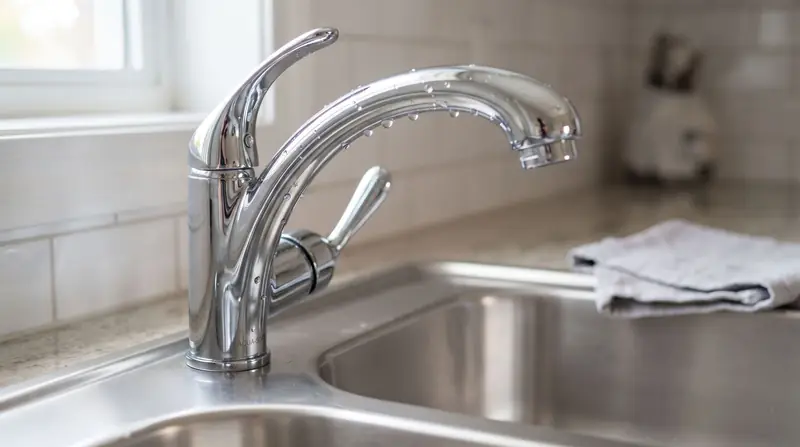
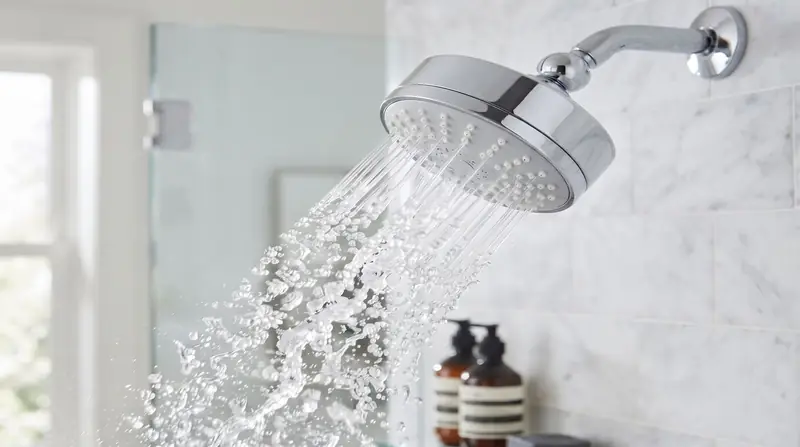
Faucets, shower heads and glass doors are where water sits in thin films and dries. Each time it evaporates, it leaves a little calcium carbonate behind. Over weeks, the film becomes a crust. Hot water makes it worse, because heat pushes minerals out of solution faster. That is also why the inside of a kettle scales up so quickly.
The visible spots are the cosmetic part. The costly part is inside equipment that heats water:
Look for cloudy glasses, crusty aerators, soap scum that returns quickly and stiff towels. For a number, use an inexpensive hardness test strip at a cold kitchen tap, or send a sample to a lab. If you already have a softener, test an unsoftened outdoor spigot and a softened tap side by side.
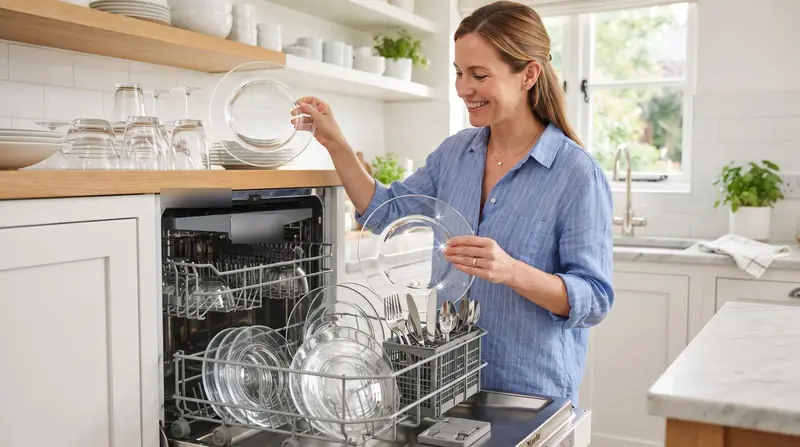
If the test shows hardness in the moderately hard to hard range and the symptoms bother you, a softener is the standard fix. It removes calcium and magnesium for the whole house, so new spots and scale stop forming, soap works better and heaters are protected. It does not remove iron staining or tastes, which need other equipment.
Aurora Water Softener installs water softeners, whole-house filter and softener systems and iron filters for Aurora homes. If you have a test number, or want help getting one, call and we can talk through what fits.
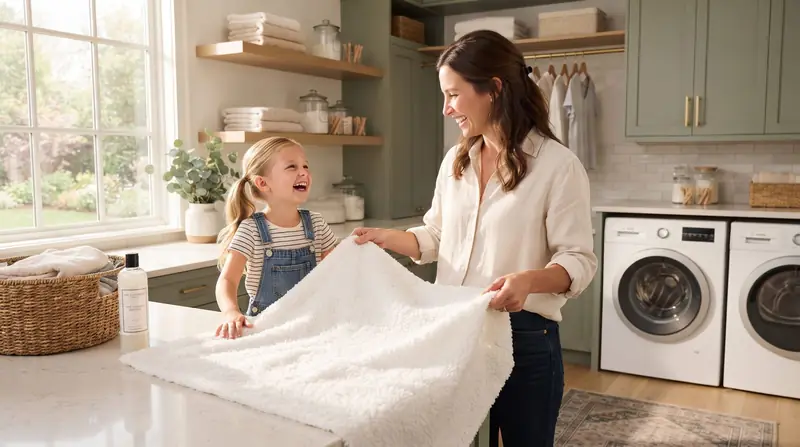
Hardness is generally treated as an aesthetic and maintenance issue, not a health concern. The costs are scale, spotting and extra detergent.
Aurora’s city water is lime-softened at the plant. Private well water skips that step and is often harder.
Yes, a vinegar soak dissolves calcium deposits. It treats the symptom; softening stops new deposits forming.
Sources: City of Aurora 2020 Water Quality Report (reporting year 2020); Illinois EPA Consumer Confidence Reports for Aurora IL0894070, 2024 and 2025; Penn State Extension, “Water Softening” (2025).
Resin, brine and regeneration, and what each means for your settings.
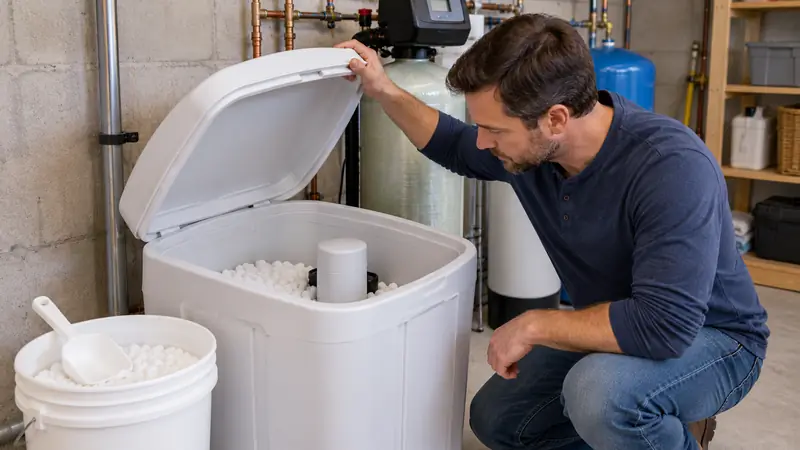
How often to clean it, and the signs it needs attention sooner.
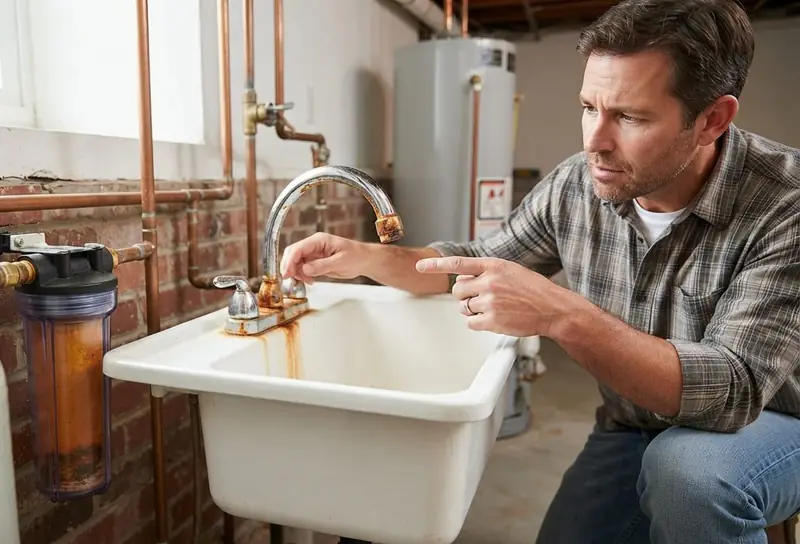
Why orange stains usually need an iron filter, not a bigger softener.
Aurora's treated city water, and why your own tap number decides the system.
Contact Aurora Water Softener
Aurora Water Softener installs softeners, whole-house filter and softener systems, iron filters and reverse osmosis for Aurora homes. Call us or use the form to describe what you are noticing at the tap.
Call 331-258-1848 Map location: 403 West Galena Boulevard, Aurora, IL 60506Send a message
Share your question and contact details in the form below.