
Hard water 101
Where white spots come from and what scale does to heaters and appliances.
Guide · how it works
A softener looks like a tall tank and a squat salt bin in the basement, but inside it runs a tidy chemical swap. Knowing how that swap works makes it much easier to choose the right size, set it properly and spot trouble early. Here is the whole process in plain terms, with notes on what matters for Aurora’s treated city water.
Aurora Water Softener installs water softeners, whole-house filter and softener systems, iron filters and reverse osmosis for Aurora, IL homes.
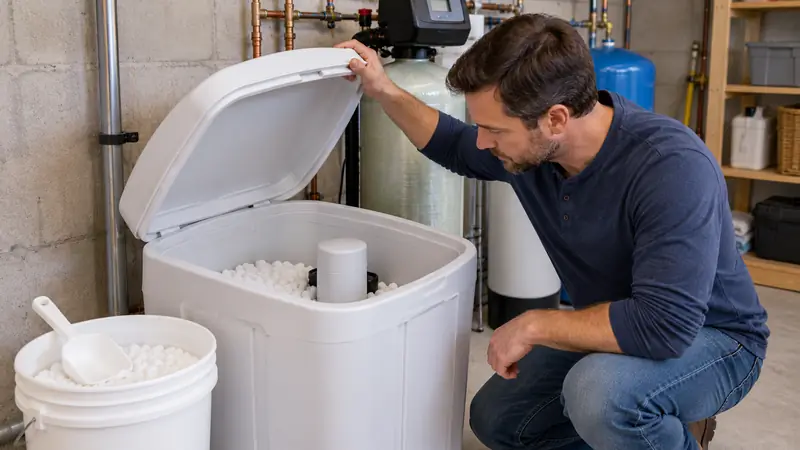
Each resin bead carries a negative charge and holds positively charged sodium ions loosely on its surface. Calcium and magnesium, the hardness minerals, are also positive, but they cling to the beads more strongly. As hard water flows down through the resin, the beads grab calcium and magnesium and let go of sodium in exchange. The water leaving the tank has had its hardness swapped for a small amount of sodium. That is ion exchange.

Eventually the beads are loaded with calcium and magnesium and have little sodium left to trade. The control head then starts a regeneration cycle, usually at night:
The whole cycle takes roughly an hour or two depending on the model. During that time the house usually gets unsoftened water through the valve.
Older softeners regenerate on a timer: every few days at 2 a.m., used or not. Demand-initiated controls count the gallons that pass through and regenerate only when the resin’s capacity is nearly used up. For a household whose water use varies, a demand control usually saves salt and water.
Either way, the control needs one key number: the hardness of the water coming in.
Aurora’s city water is not raw well water. The City’s 2020 Water Quality Report says the plant lime-softens the blend of Fox River and well water, and it gave the treated tap water an average of 120 to 140 mg/L, about 7 to 8 grains per gallon. Newer state-filed reports do not list hardness.
That means two things. First, a softener should be programmed for the finished water at your tap, not for the much harder raw groundwater people sometimes mention. Setting it too high makes it regenerate more often than needed and wastes salt. Setting it too low lets hardness slip through before the next cycle. Second, the right setting comes from a test at your own tap, because a 2020 citywide average is only a starting point.
If iron shows up in that test, many controls let you add a small allowance for it, but visible iron staining is a sign you need an iron filter ahead of the softener rather than a bigger setting.
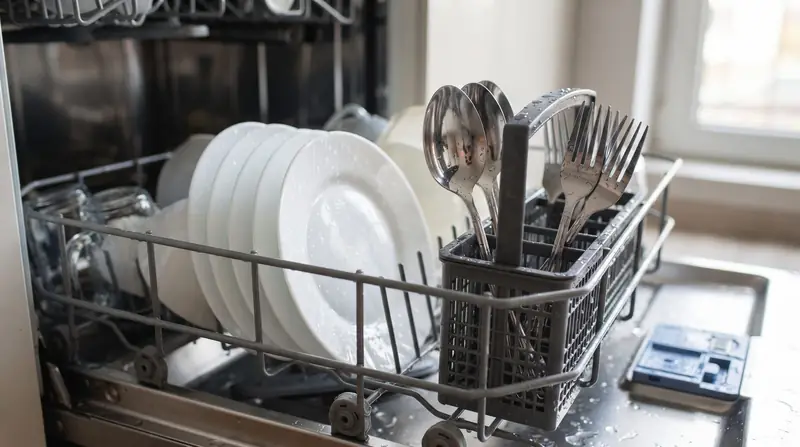
Without calcium and magnesium, soap does not form the sticky curd known as soap scum, so it lathers easily and rinses quickly. Some people describe softened water as feeling “slippery”; that is simply soap rinsing off skin without a mineral film. Glassware dries clearer and new scale stops forming on fixtures and inside the heater.

A softener makes the most sense when a test shows moderate or higher hardness and you are dealing with spots, scale or a tankless heater that needs frequent descaling. It is the wrong tool for orange iron stains or for tastes and odors.
Aurora Water Softener installs water softeners sized to your household and set to your measured water, along with whole-house filter and softener systems and iron filters. Call to talk through what your test shows.
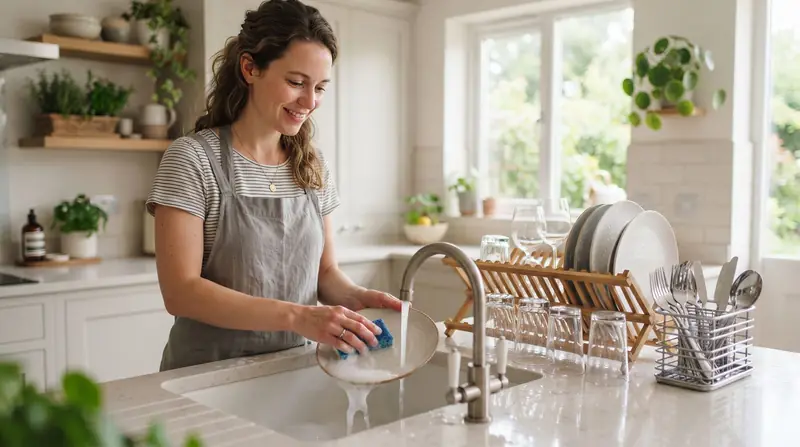
It depends on the incoming hardness: the harder the water, the more sodium is exchanged. People watching sodium often use a reverse osmosis tap for drinking water.
Many softeners can use potassium chloride. It costs more and may need a different setting; check the manual.
Many years on city water, less where chlorine or iron attack it. Iron fouling is a common cause of early failure.
Sources: City of Aurora 2020 Water Quality Report (reporting year 2020); Illinois EPA Consumer Confidence Reports for Aurora IL0894070, 2024 and 2025; Penn State Extension, “Water Softening” (2025).
Where white spots come from and what scale does to heaters and appliances.
How often to clean it, and the signs it needs attention sooner.
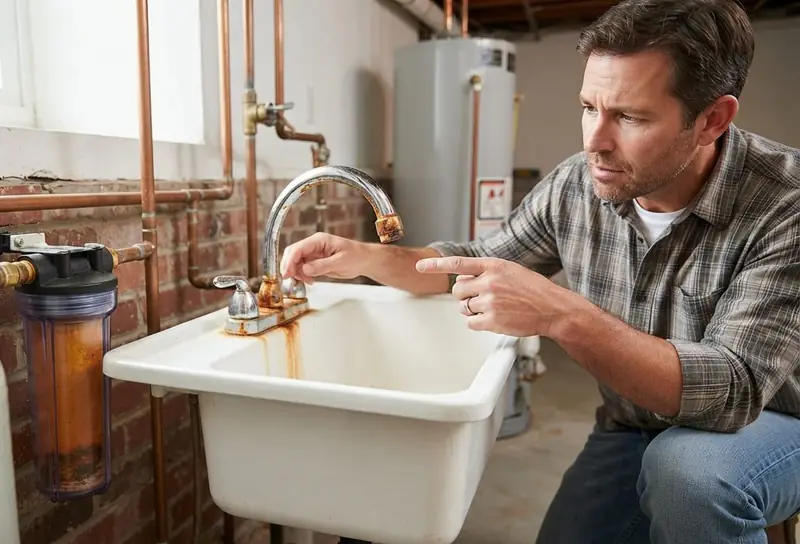
Why orange stains usually need an iron filter, not a bigger softener.
Aurora's treated city water, and why your own tap number decides the system.
Contact Aurora Water Softener
Aurora Water Softener installs softeners, whole-house filter and softener systems, iron filters and reverse osmosis for Aurora homes. Call us or use the form to describe what you are noticing at the tap.
Call 331-258-1848 Map location: 403 West Galena Boulevard, Aurora, IL 60506Send a message
Share your question and contact details in the form below.